I have lived and worked in a small, rural town for the past 27 years. There are many, many great things about it.
Every time you go into a store you see a friend, a neighbor or a colleague.
You wave at each and every car that passes you on the road when you are walking or driving.
Rush hour is only bad during school bus travel hours.
You know your sheriff and all of your elected officials by name, and you feel free to complain or praise them when you want to express your opinion on a local issue.
You raise money for the schools, and you know every teacher your children have ever had.
There is a sense of warmth and family everywhere around.
You smile when you see someone you may not be very fond of at the moment.
You rally around your neighbors who are suffering or in pain, and you come to their aid.
And you never talk about controversial issues in public.
Then came 2020 and the killing of George Floyd.
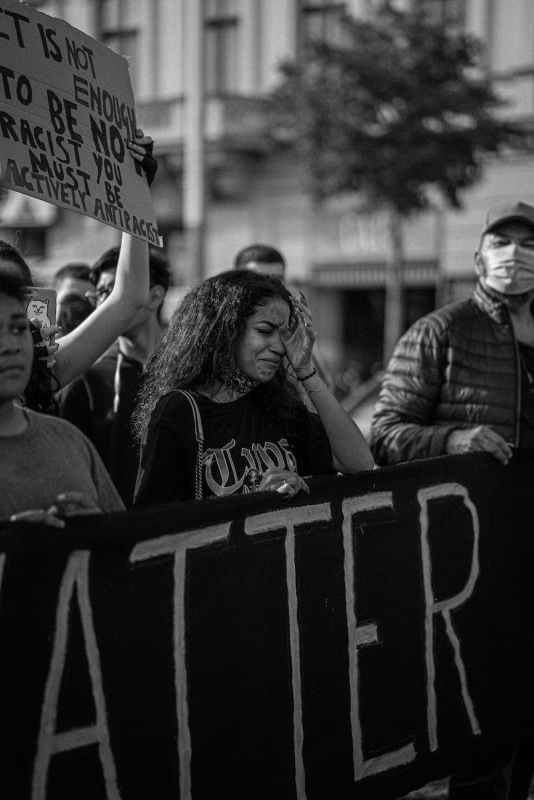
Our little town of roughly 2,000 had a group of citizens who wanted to demonstrate their outrage and concern about the events surrounding the killing of George Floyd.
These folks were black and white, male and female. Straight and gay. Some of them were actively involved in community events, others not so much. Some of the people had children, while others did not. Some were young, and some were old.
These concerned citizens – all raised and native to this small town – started a group chat on social media. They contacted the sheriff’s office. They set a time and date at the steps of the old courthouse, which still contains a monument to Confederate war heroes. They had everything prepared.
The week before the event, a backlash appeared on social media. Community posts on Facebook told of “outsiders” coming to our small town. These “outsiders” were supposedly Black Lives Matters (BLM) agitators who were going to start rioting, burning, and looting in our small town. BLM and ANTIFA was going to foment race riots and burn Main Street to the ground.
Postings on social media at the time became bellicose. Many folks began saying that BLM was not coming to their small town without a fight, and that ANTIFA would be in for a world of hurt if they showed up. They would be ready and would defend their town against these outsiders because they stood for law and order.
All of a sudden, the local government and law enforcement became concerned. They spoke to the leaders of the protests, and there was talk of requiring a permit, which had never been required before when the Sons of Confederate Veterans and the local American Legion Post used the old Courthouse steps and grounds.
The organizers needed a lawyer to make sure that any steps that were taken by the local government to quash the protest would be immediately handled. And the protester leaders were now scared.
With good reason.
On the Sunday afternoon of the protest, about 50 people concerned about racial equality and justice gathered at the small-town courthouse square, under the shadow of the Confederate monument, and watched as across the street, armed white men in pickup trucks and SUV’s stood watch over them.
The sheriff and a number of deputies mingled with the George Floyd demonstrators in the park and greeted the organizers by first names. The sheriff, who was white, asked if they needed anything. The law enforcement officers knew everybody in the crowd inside the courthouse square, yet strangely enough, they did not know all of the anti-protestors.
Before any of the speeches began, two elected officials of the local Republican Party, at least one of whom boasts quite regularly that he goes nowhere in public without a sidearm, walked up to the brick wall of the courthouse square and began taking pictures of all of the demonstrators. Then they walked back to the line of vehicles across from the square where he watched the proceedings from a distance.
As prayers were offered by the George Floyd protestors for healing and justice, and speeches called for a better world, the only tension came from the people outside the courthouse square, as they glared at the supports of George Floyd with anger and disdain.
Then, once the speeches were over, and the demonstrators began marching up and down the street on the sidewalk, the jeers and racial epithets came from passers-by in pickup trucks and cars.
The drivers shouted slurs and hate-filled slogan at the demonstrators.
The demonstrators called for justice for the unjustly slain.
No one burned any flags. No outside BLM or ANTIFA agitators ever appeared. No businesses were looted. The downtown was not burned to the ground.
“Around here, we take care of our own,” country singer Jason Aldean sings in Try That in a Small Town.
Here, “our own” are a lot more than people wearing cowboy boots and driving pickup trucks. Our own love our country and ALL of its people.
Our small town supports those victims who have been wrongly murdered and at the same time those people sworn to protect and uphold the rule of law in our community. The two are not mutually exclusive.
Our own are bigger than slogans and those who would fan the flames of racial animosity and hate.
Our own demand every community uphold the founding principles of life, liberty and the pursuit of happiness.
Our own holds everyone accountable.
Our own support justice and freedom.
Jason Aldean has it wrong: Our own are not looking for an Armageddon. Our own are striving for a better nation and a better way of doing things.
 dum spiro, spero